Summary
The main character in any story is commonly referred to as the hero for a reason. While there are exceptions, gamers can often expect that a hero will do or at least attempt something that can be considered heroic. That might be anything from helping a friend to saving the world. Stories of heroes accomplishing great feats can be found throughout human history in every imaginable culture. Often, when one plays a video game with a compelling story, theyplay as the hero. Usually, this hero is set up to accomplish something by the story’s end. Some games might like to experiment with variations or ask questions about what makes a hero. Sometimes, especially in RPGs, they might offer moral choices that allow the hero to fall from grace, but even then, there is still an ultimate goal.
Sometimes, being the hero can take an unexpected turn. The right thing may not be what a player expects, or the hero may believe they have a chance to help someone but fail to anticipate an important variable. It could be the hero lacking crucial information that they only learn about after. It could even just be that the hero’s back is against the wall, and they have no choice but to try something drastic and worry about the consequences later. Whatever the case may be, there are many video game instances whereheroic acts have backfired.

Dragon’s Dogma 2is a complicated RPG that can be hard to learn, and it has some very complex lore, but the basic setup and ultimate goal seem straightforward enough. Ultimately, there is a dragon who poses a threat to the world, and it is the hero’s destiny to slay it. The theme of heroes batting dragons is hardly new in fiction, and that seems like the basic idea behindDragon’s Dogma, is it not? Well, sort of, but it turns out to be a bit more complicated if one pursuesthe secret “true ending.”
The world ofDragon’s Dogmaexists in cycles where dragons and an “arisen” constantly emerge and face each other. In the true ending, the arisen can attempt to break the cycle by ending themselves. However, instead of freeing the world from future dragon attacks, it actually destroys it. It turns out that having dragons occasionally emerge and cause destruction is actuallynecessaryfor the world to keep going.

The originalModern Warfare’s plot centered around hunting down members of a terrorist organization that turned out to be run by Ultranationalist Imran Zakhaev. It ends up costing a lot. An entire division of marines (including one of the playable characters) is lost just trying to deal with one of Zakhaev’s allies. When Soap finally has a chance, after watching most of his friends die preventing a nuclear strike on the US, it feels pretty cathartic to finally take out the person who caused him so much trouble.
Defeating Zakhaev seemingly ends his reign of terror. That is untilModern Warfare 2comes along. Killing Zakhaev only turned him into a martyr and cleared a space forhis protege, Vladimir Makarov, to take over and start an even bigger war that escalates to a global level. Soap himself can’t help reflecting on how he thought his side had won only to have their victory turned around on them.
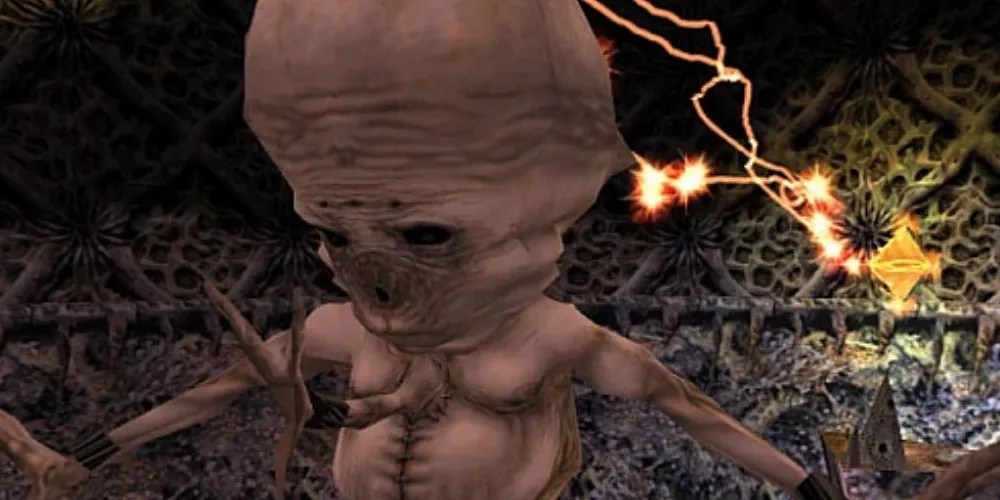
Valve’s genre-defining FPS,Half-Life, centers around a “Resonance Cascade”- a sort of collapse of reality that results in an alien infestation. Gordon Freeman has to spend the whole game trying to find a solution, not helped by the U.S. Army trying to cover it up. After fighting his way through the Black Mesa laboratory and making it to the other dimension of Xen, he faces and kills the alien mastermind behind it all, the Nihilanth.
Unfortunately, what Gordon couldn’t know (and what might have been planned by G-Man) was that killing the Nihilanth would actually make the Resonance Cascade worse. It managed to cause intense “portal storms” around the world that would result in further carnage. As if that wasn’t bad enough, it also ended up drawing the attention of the Combine Empire, who then invaded and conquered the entirety of Earth in seven hours, turning it into a 1984-style dystopia byHalf-Life 2.

A big theme inGears of Waris the idea that humans are naturally violent, and the end of one war only sets the stage for a much bigger one. With such a cynical outlook on the world, it’s hardly surprising that the main characters are often pushed to achieve short-term victories that only later turn out to have long-term consequences.
In the first game, Delta Squad successfully detonates a lightmass bomb that is supposed to wipe out the locust tunnels. ByGears of War 2, however, players learn that the bomb awakened a giant riftworm that the locusts have been using to destroy human cities and caused a rustlung epidemic by releasing imulsion into the atmosphere. The sinking of Jacinto would also later have someserious environmental consequences. Even when the locusts were finally defeated inGears of War 3, they still managed to return as an even bigger locust horde in4. No matter how many “victories” Delta Squad earns, it just seems to set up more fighting.

Portal 2begins with Chell once again trying to escape Aperture Labs, and this time, she has an ally - a quirky personality core named Wheatley. He seems to do his best to help her, but they run into problems when the psychotic murder computer GLaDOS is accidentally reactivated and begins putting Chell through more murder tests. Luckily, there’s a procedure that allows her to be swapped out with a different core. So it seems like a simple course of action - get rid of the psycho computer that’s been tormenting Chell and so many other humans and replace it with a friendly ally.
Unfortunately, it turns out that giving a machine designed to be the world’s biggest idiot full control wasn’t the best idea. It backfires when, instead of releasing her, Wheatley sends Chell into the depths of Aperture’s basement. By the time she gets out, there’s an even bigger danger of Wheatley’s poor management causing a nuclear meltdown. Ironically, the only way to stop it is to reinstate GLaDOS as the central core.

Team Ico’sShadow of the Colossusfeatured a “hero” who started from an understandable position. This character, known as “Wander,” seeks to revive a woman he cares deeply for. Unfortunately, the lengths he goes to accomplish that end make one wonder if his “heroics” are really worth it.
Over the course of the game, Wander has to take ona number of giants, many of whom don’t even do anything to deserve being brutally murdered and would clearly prefer to be left alone. Despite fulfilling his obligations, Wander isstillpunished for his actions, something reflected in his changing appearance. He doesn’t even live to see his girlfriend revived. There is also the ominous implication that she may have had a cursed child, so, aside from costing everything, Wander may have actually made thingsworsefor the woman he’s trying to help.

The final installment of the once-popularSpec Opsseries,Spec Ops: The Line, ended up being a cult classic for its approach in criticizing military shooters. The campaign could pretty much be described as one big mess caused by backfired heroism. What starts as a rescue mission turns into a bloodbath, much of which is caused by the player character, Martin Walker. His entire odyssey through Dubai amounts to one failed attempt after another as he just seems to dig himself deeper. This is not helped by the game having a tendency to seemingly throw an opportunity at Walker to actually do something good only to reveal that he’s just made things worse.
Special mention goes to the infamous scene where the player is tricked into shooting white phosphorus at a bunch of civilians, or when they get railroaded into destroying the primary water supply. Eventhe loading screenslove to call out players for playing the game with lines like “If you were a good person, you wouldn’t be here” or “Do you feel like a hero yet?”
