Summary
Many video games take their cues from movies and TV shows. It’s not surprising given they’re all visual mediums. Developers and artists simply have an easier time translating something that they can see. That said, books can be an equally fruitful source of material.
That’s whyclassic literature has inspired several of gaming’s greats. The titles are sometimes direct adaptations of the novels, letting players tackle the books' iconic events in different ways. More often than not, however, the developers pick and choose aspects to adapt. They then fashion these facets into a new work to capture audiences both new and old. Both approaches can succeed in the right hands, and these games prove that.

J.R.R. Tolkien’sLord of the Ringsand other Middle-earth novels are among the greatest literary works of all time. The world of Men, Elves, Dwarves, and other creatures is so rich in detail, history, and culture that fans could swear it was real. At the center of it all, however, arepoignant tales of humble heroes triumphing over eviland power corrupting the noblest individuals. These traits are a reliable guide for any narrative. It’s partially why so manyLOTRgames exist, even if most of them use the aesthetic of Peter Jackson’s movies.
On the other hand,The Lord of the Rings Onlinetakes inspiration directly from the books. This MMORPG makes players a pivotal part of the War of the Ring. Their deeds have a tremendous impact on events in the mainline trilogy, both on the frontlines and behind the scenes. That’s because the narrative tackles the northern conflict and otherplot threads described in supplementary works. This material provides hundreds of hours of content as players partake in quests and activities of all stripes.

What’s more, these storylines unfold within iconic locales beautifully brought to life.LOTROtruly lets fans live in Middle-Earth.
One of the great faces of horror is Count Dracula. In Bram Stoker’s novel, the vampire terrorizes Victorian London, drinking the blood of innocents and corrupting others into his soulless servants. All of it is to slake his constant thirst and desire for conquest. As effective as he is, the villain transcends the source material and appears in several works outside his original book.

One of these isCastlevania. This action platformer series sees players attempt to vanquish the evil count in his home. The gothic castles and other haunted settings make for eye-popping level design, and it’s always fun to slay classic horror monsters with a trusty whip. Despite these strengths,loyalists may take issue with some of these games.
Castlevaniais selective in how it adapts Bram Stoker’s book. Dracula is the overarching villain, and his castle still lies in Transylvania. Yet instead of using Jonathan Harker and Mina Murray as protagonists, the narratives follow the vampire-slaying Belmont clan.

That said, some series entries incorporate more elements of the source material than others. For instance, John Morris ofCastlevania:Bloodlinesis the son of the novel’s Quincy Morris. The series has also included characters from other scary stories, such as thetitular vampire fromCarmillaand the monster fromFrankenstein. For these reasons,Castlevaniais more of a horror highlight reel than a direct translation.
The Witcherseries is another rich fantasy realm, albeit one rife with racial strife and international conflict. The books, written by Andrzei Sapkowski, follow Geralt of Rivia, a mutated monster slayer who desperately tries to maintain his neutrality. That aim becomes increasingly difficult amid moral and ethical dilemmas, and it’s virtually impossible when these dilemmas threaten the people he cares about. While the books may not be decades old, they are highly regarded as some of the best examples of Polish literature of all time.
Fans feel that conflict inTheWitchergames. These titles present complex plots involving ambitious power plays, crushing betrayals, and inner turmoil. They technically take place after the books, but they maintain many of the same characters. In addition, they carry similar themes about the price of neutrality andchoosing the lesser evil.
It all culminates inThe Witcher 3: Wild Hunt. This is a sprawling sandbox encompassing more of Sapkowski’s world than ever before. The game has countless quests to complete, and these are all engaging in how they respect the novels' cynical messages and moral ambiguity. More importantly, the titlebrings Geralt’s journey to a satisfying conclusionby reuniting him with his surrogate family. In the end, he shapes a meaningful legacy beyond being just a Witcher.
One might expect this sci-fi title to have similar sci-fi roots, butEnslaved: Odyssey to the Westactually takes inspiration from a classic Chinese folktale:Journey to the West. The classic story chronicles a Buddhist monk’s pilgrimage to retrieve a set of sacred scrolls from India. He encounters various demons and other obstacles, and his only defenses are his companions–all inspired by animals like a monkey and a pig. The timeless tale has inspired numerous other stories in fiction.
It also forms the backbone ofEnslaved. The game may lack a monk, but it does have Trip, a girl wishing to return to her faraway village. She receives reluctant aid from a couple of unscrupulous individuals: Monkey and Pigsy. In a nod to its Asian roots, the former sports a staff for both melee and ranged combat. It also facilitates some enjoyable (if derivative) platforming. The real attraction, though, is the story.
Enslavedevolves the narrative’s themes of finding enlightenment, maturity, and redemption. These emerge not just through the compelling characters and their growing bond, but also via the concept of slavery. In an uncertain world, some people may prefer the solace and blissful ignorance of servitude. Who wants to “enlighten” themselves andface reality in an apocalypse? The plot puts an unsettling twist on the usual quest for freedom, and it’s a journey that not everyone would embark on.
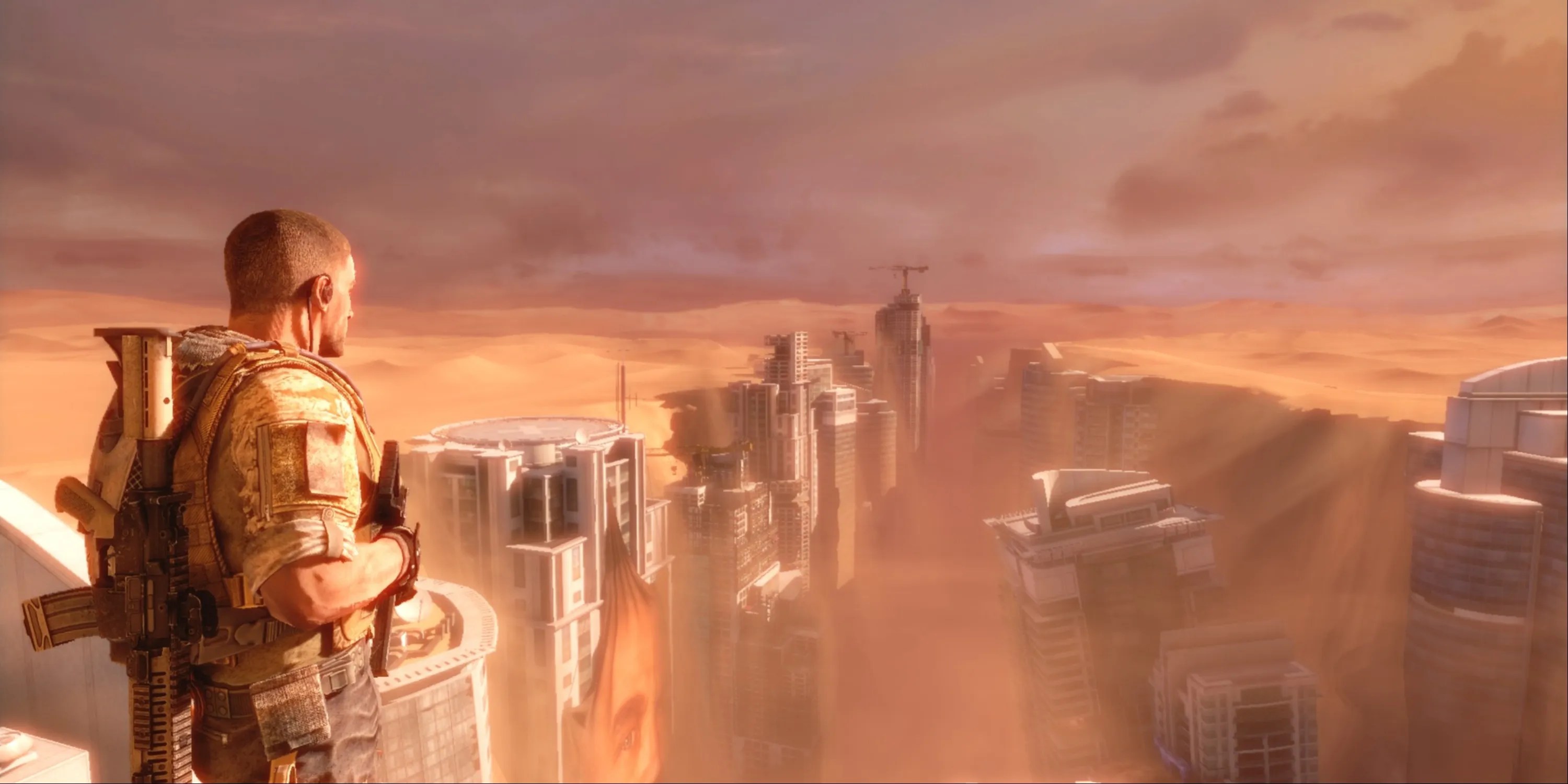
Very little hype was given to this game leading up to its release, butSpec Ops: The Linequickly became an under-the-radar hit thanks to its hard-hitting narrative about the moral grayness and psychological depravity of warfare. A standard third-person military shooter on the surface,Spec Opshid a much deeper game underneath.
What many don’t know is thatSpec Opsis based on the Joseph Conrad novellaHeart of Darkness.The same story that inspired the classic Vietnam War filmApocalypse Now, Spec Ops’Captain Walker is essentially a reversal of the novella’s protagonist, Charles Marlow, with Walker becoming more akin to the novella’s eventual antagonist, Kurtz (or Konrad in the game, a play on the name of the original author), by the game’s conclusion.
The themes of civilian casualties, the trauma of war, and the flaws of the American war machine’s presence abroad that madeApocalypse Nowso affecting are all present inSpec Ops: The Line, and while the story is a bit less philosophical than its inspirations, those inspirations still shine through.
