World of Warcraft: Shadowlandsis set to launch later this month. The upcoming expansion for the long-running MMORPG will introduce some brand new concepts to a universe which Blizzard began back in 1994 with the release ofWarcraft: Orcs and Humans.
One new feature of the lore is “anima” – the essence of souls. Not only does anima have a huge role to play in the premise and plot ofWorld of Warcraft: Shadowlands, but it draws attention to a trend inWorld of Warcraft’s storytelling which has been unfolding since at leastWrath of the Lich King.

RELATED:World of Warcraft Player Raids Using a Piano
What is Anima?
Anima is the fundamental essence of the souls that enter the Shadowlands, the realms of death in theWarcraftuniverse. Anima is the lifeblood of the Shadowlands, though it appears to have different purposes in some of the different areas of the realm. InRevendreth, for example, the vampiric Venthyr drain the anima of prideful souls like Kael’thas Sunstrider, ostensibly in an attempt to purify them and avoid having to damn their souls to the Maw for all eternity.
The short filmShadowlands Afterlives: Ardenwealdmade it appear that nature spirits that travel to that realm of death had their anima used to sustain groves which in turn help these souls on their journey through the cycle of rebirth. However, part of the premise ofShadowlandsis that all souls that die across the material plane are now travelling directly into the Maw, causing an anima drought seen in theShadowlands Afterlivesshorts for both Revendreth and Ardenweald.

In the Shadowlands, anima is everything. It’s what connects the realms of the Shadowlands together, and it’s used as currency - even sustenance - for some of the inhabitants of the realm. It appears to be portrayed as the life force which keeps the wheel of life and death turning intheWarcraftuniverse.
Anima as a Storytelling Device
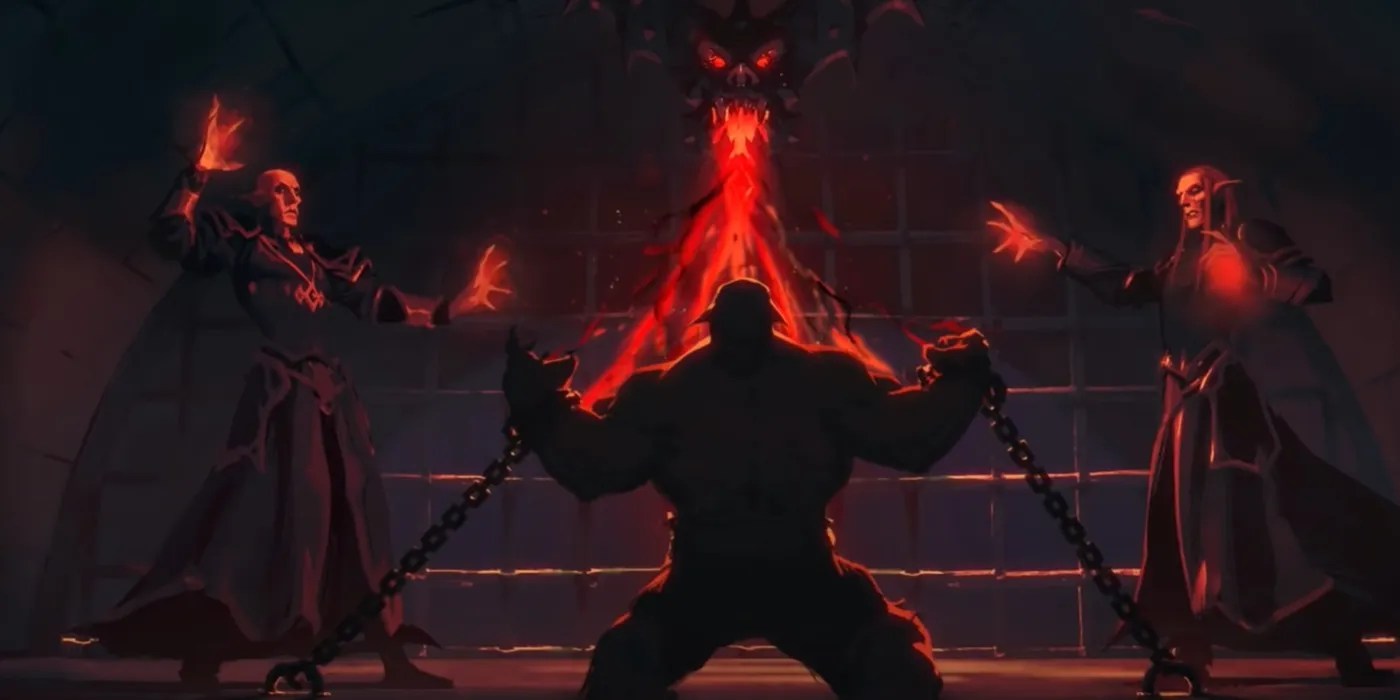
However, there is another aspect of anima which puts into focus one trend inWorld of Warcraft’s storytelling. The greater a soul is, the more anima it has. This means figures whose lives had a great impact on the world like Garrosh Hellscream, the aforementionedKael’thas, or Kel’Thuzadthe Lich have souls with more anima. Garrosh even appears to be referred to as “old reliable” in the Revendreth short, where he is briefly seen being drained of his anima in a torturous magical ritual.
WhileWarcraft IIIin particular focused on key figures likeArthasand Illidan in its campaign’s stories, whenWorld of Warcraftbegan its focus on “great” figures was more restrained. Huge lore characters like Thrall, Sylvanas Windrunner, and Tyrande Whisperwind were designated roles as faction leaders who could be found and defeated in their racial capitals, but were not directly involved in instanced raids or many major parts of the story.
This changed inWrath of the Lich King. The death ofraid boss Onyxiawas retconned to be the responsibility of returning king of Stormwind Varian Wrynn, and after the death of the Lich King a noticeable storytelling trend began to be established where player characters accompanied major lore figures as the story of theWarcraftuniverse unfolded, but were necessarily never a vital part of that story. This led to a situation where player characters seemed too central to be ignored by the plot in the way that they were.
The fact that anima is more present in “great” souls than souls which aren’t considered great is a stark reminder of how much the focus ofWorld of Warcrafthas changed from its players and theWoWcommunityto a few main characters on either faction and their story. It’s even likely that the large amounts of anima contained in the player character will be commented on by some NPCs, but this doesn’t negate the fact that part of the premise ofShadowlandsis that some characters' lives literally have more value in the universe based on a vague idea of greatness which can be reduced to their value in the story.
RELATED:Is World of Warcraft Worth Playing in 2020
The Problem With WoW’s Stories
Part of the problem with this is that it no longer makes the player character feel like one character of many in a fully fleshed out world, but leaves them in the strange position of playing second-fiddle to major lore characters instead of experiencing their own story. It also makes the world itself feel smaller by reducing most major changes in the world to the actions of a few select racial leaders. Moments in vanillaWorld of Warcraft– like the opening of thegates of Ahn’Qirajrecently revisited inWoW Classic– struck a balance between the involvement of lore figures and the prioritization of the players’ roles and the creation of server communities.
The extent to which anima will continue to play a role asShadowlandsreleases patchesremains to be seen. For now, at least, it seems to be a major part of the premise of most of the new zones in the Shadowlands themselves. Fans can expect to see many major figures from the lore return in the afterlife, and, following the trend from previous expansions, fans may also expect anima to allow for an even greater focus on the role of the player character as a “great” figure in theWarcraftuniverse in their own right, albeit a necessarily interchangeable one.
The great stories that players remember from an MMO shouldn’t be about NPCs. They should be about known players on the server, group gambits that paid off, and memorable world events caused by players, not staged for them. Anima may be a small part of a broader trend, but it serves as a reminder of the things thatWarcraft’s storyhas increasingly come to prioritize. Though the success of the upcoming expansion remains to be seen, fans can already be confident that the game and the kinds of stories it leaves players with will be very distinct from the game and stories which revolutionized the MMORPG scene in 2004.
World of Warcraftis available now for PC.World of Warcraft: Shadowlandslaunches globally on November 23 for PC.
