For the longest time, Intel had dominated thegaming CPU marketwith not only a variety of options, but also great value offerings. In the past few years, AMD has slowly regained ground and now stands as just as strong a contender when it comes to gaming CPUs. With the competition getting fierce, both manufacturers have been trying to make new advancements in processor technology and, as such, Intel has released its latest generation of Core CPUs, the 14th Gen lineup that offers better performance compared to the previous generation.
Interestingly, this has resulted in the 13th Gen offerings presenting as better value options, even though they are a generation old. Furthermore, Intel CPUs allow users to take advantage of technologies like Thunderbolt andconnect external peripheralswith high bandwidth. With a bunch of CPU options to choose from, finding the best Intel CPU for gaming can be tricky, so this guide should help make the decision a bit easier.
Game Rant’s Picks for the Best Intel CPUs for Gaming
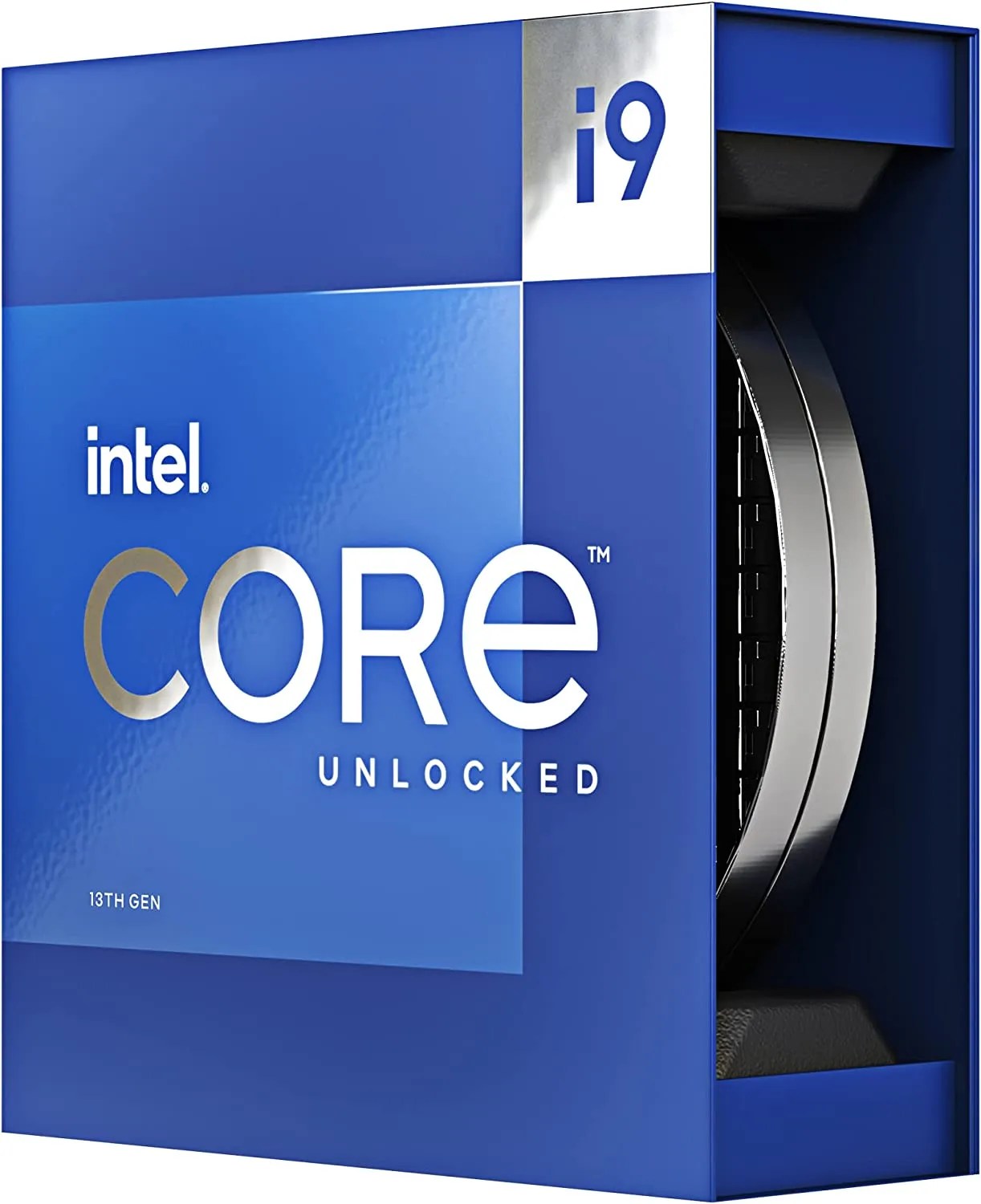
Intel Core i9-13900K CPU
The Intel Core i9-13900K is a high-performance processor that combines 24 cores, comprising 8 P-cores and 16 E-cores, with 32 threads. The processor comes with an integrated Intel UHD Graphics 770. It utilizes a hybrid architecture that integrates two core microarchitectures, effectively distributing workloads to optimize performance.This processor can reach speeds of up to 5.8 GHz and features a 36 MB cache. It is compatible with Intel 600 series and 700 series chipset-based motherboards. The unit supports Turbo Boost Max Technology 3.0, as well as PCIe 5.0 & 4.0 interfaces for rapid data transfer.
Even though it’s a generation old at this point, the Intel Core i9-13900K stands as the best Intel CPU for gaming overall. It is the top of the line offering from the previous generation and is about $60 cheaper than the top-of-the-line current generation Intel CPU. It features a total of 24 cores and 32 threads, with the cores being split into eight P cores and 16 E cores. The CPU can boost up to 5.8GHz out of the box and, being a ‘K’ series SKU, it can be overclocked with great potential.
The Core i9-13900K comes with 36 MB of Intel Smart Cache, which is the same as the top-of-the-line and much more expensive i9-14900KS. It is, however, a power-hungry chip and can draw up to 253W under standard operation. Those using DDR5 RAM can continue doing so, but they will be limited to speeds of up to 5600 MT/s. In terms of capacity, it supports up to a massive 192 GB of RAM.
The Core i9-13900K comes with integrated graphics, the UHD Graphics 770, to be specific. While it is not sufficiently powerful enough to game on, it can be useful for troubleshooting display issues and more. Gamers also get support for the latest PCIe 5.0 standard, be it storage or other hardware.

Those looking to save a bit more cash and willing to sacrifice the iGPU can go with theCore i9-13900KF.
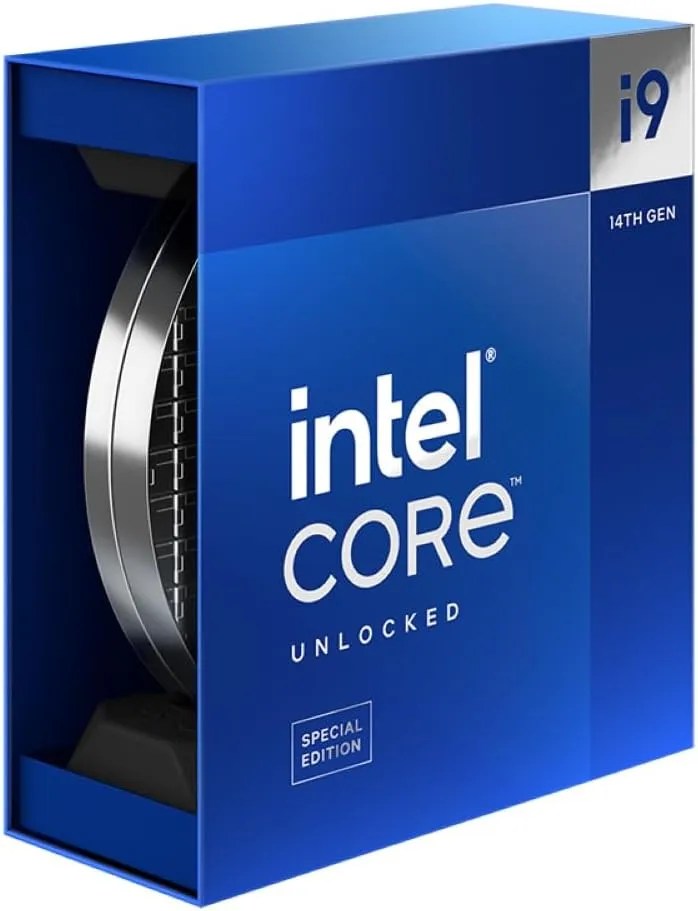
Intel Core i9 14900KS 24-Core, 32-Thread CPU
The Intel Core i9 14900KS 24-core, 32-thread CPU is Intel’s special edition CPU take on its flagship 14th generation CPU, the Core i9 14900K.It is essentially a cherry-picked 14900K SKU that can push higher clocks with up to a minimum of 6.2 GHz on its P-Cores, making it effectively the highest-clocked CPU out of the box to date when it comes to boost clocks from Intel.It trades at a significant premium as a result and is expected, as a limited-run chip, to be a collectible SKU with high demand from enthusiasts and overclockers in 2024.
For a no-compromise gaming experience, the Core i9-14900KS is where it’s at. The premium CPU offering is the latest and greatest chip that the company offers for the mainstream market. It has the same core count and combination of cores as the previous generation Core i9-13900K and the current generation 14900K, but it can boost higher than both of those at up to 6.2GHz. The ‘KS’ series CPUs are higher-binned than their ‘K’ counterparts, which is why they are able to achieve higher clock speeds. Essentially, these are the CPUs that have won the silicone lottery.

The higher clock speed does not come at a cost of power draw as the 14900KS has the same maximum turbo power of 253W. The cache memory is the same as well, at 36 MB. It comes with anintegrated GPUand is a great overclocker as well, so much so that users have been able to push this CPU to 9.12GHz, making it the fastest CPU ever. Naturally, it supports PCIe 5.0 standard and up to 192 GB of RAM.
The Intel Core i9-14900KS is hands down the fastest CPU for gaming that money can buy, and it leaves most AMD offerings in the dust.
Intel Core i5-13600KF
The Intel Core i5-13600KF is a budget-friendly yet fairly capable CPU for gaming. It can deliver decent performance in most modern games at even 1440p resolution, depending on the settings and the GPU. It features 14 cores and 20 threads with boost clock speeds of up to 5.1 GHz out of the box. The ‘F’ in the name means there is no iGPU which helps keep the cost down.
The Core i5 series of Intel CPUs are meant to be the mid-tier budget-friendly offerings that sit between the top-tier Core i7/Core i9 models and the lower-end Core i3 models. The Intel Core i5-13600KF strikes the perfect balance between performance and price. It features 14 cores in a six P-core and eight E-core configuration, along with 20 threads. It can boost up to 5.1GHz, which is quite impressive considering the price point and relatively low maximum power draw of 181W.

Compared to the newer Core i5-14600KF, the older processor delivers almost the same real-world performance with the 14th Gen CPU edging ahead by a couple of frames. Plus, it costs $50 less, which makes it a great value offering. Despite being an older generation mid-tier SKU, it still supports PCIe 5.0 and up to 192GB DDR5 RAM, up to 5600 MT/s.
Since this is a ‘KF’ model, it does not have an integrated GPU, but can still be overclocked when used with a compatible Z-series motherboard. This takes the price even lower, but those looking for a processor with an iGPU can check out the slightly more expensive, yet budget-friendly,Core i5-13600K. Those with even more money to spare can take the jump up to theCore i5-14600KF,which is still arguably a good deal.
Intel Core i5 12600KF
With a fantastic 6+4 core combo and 16 threads, the i5 12600KF tops the chart for being the best-selling budget Intel CPU. Featuring Alder Lake hybrid architecture, the processor can handle heavy loads pretty well, distributing the main and background operations to the appropriate cores. At a price of around $150, the i5 12600KF will help users build an excellent mid-range gaming build.
Those looking for a decent gaming experience for well under $200 should consider the Intel Core i5-12600KF. As the name suggests, this CPU is part of the 12th Gen lineup, which is two generations old at this point, but still fairly capable. It still comes with Intel’s P-core and E-core configuration with 10 total cores split into six and four respectively. It also supports Hyper-Threading with 16 threads and the CPU can push a maximum turbo frequency of 4.90GHz.
As expected, the Intel Smart Cache is lower here at 20 MB and a maximum of 128 GB of RAM is supported at DDR5 4800 MT/s, but this leads to a lower power draw of just 150W at load. It does get PCIe 5.0 support, so those expecting some sort of future proofing should be satisfied. The Core i5-12600KF is an unlocked CPU with no iGPU, but of course, for slightly more money, gamers can get the Core i5-12600K with an integrated GPU.
With some strategic overclocking, gamers can squeeze even more performance out of the Core i5-12600KF, further reducing the performance gap between it and its much more expensive older sibling, theCore i7-12700K/KF, or even13600KFfor that matter. This entry-level CPU features most of Intel’s advanced technologies, like Optane memory, Intel Speed Shift, Intel DL Boost, and more, but it does not support Turbo Boost Max Technology 3.0, which means gamers will have to manually tweak the parameters to get the most out of the chip.
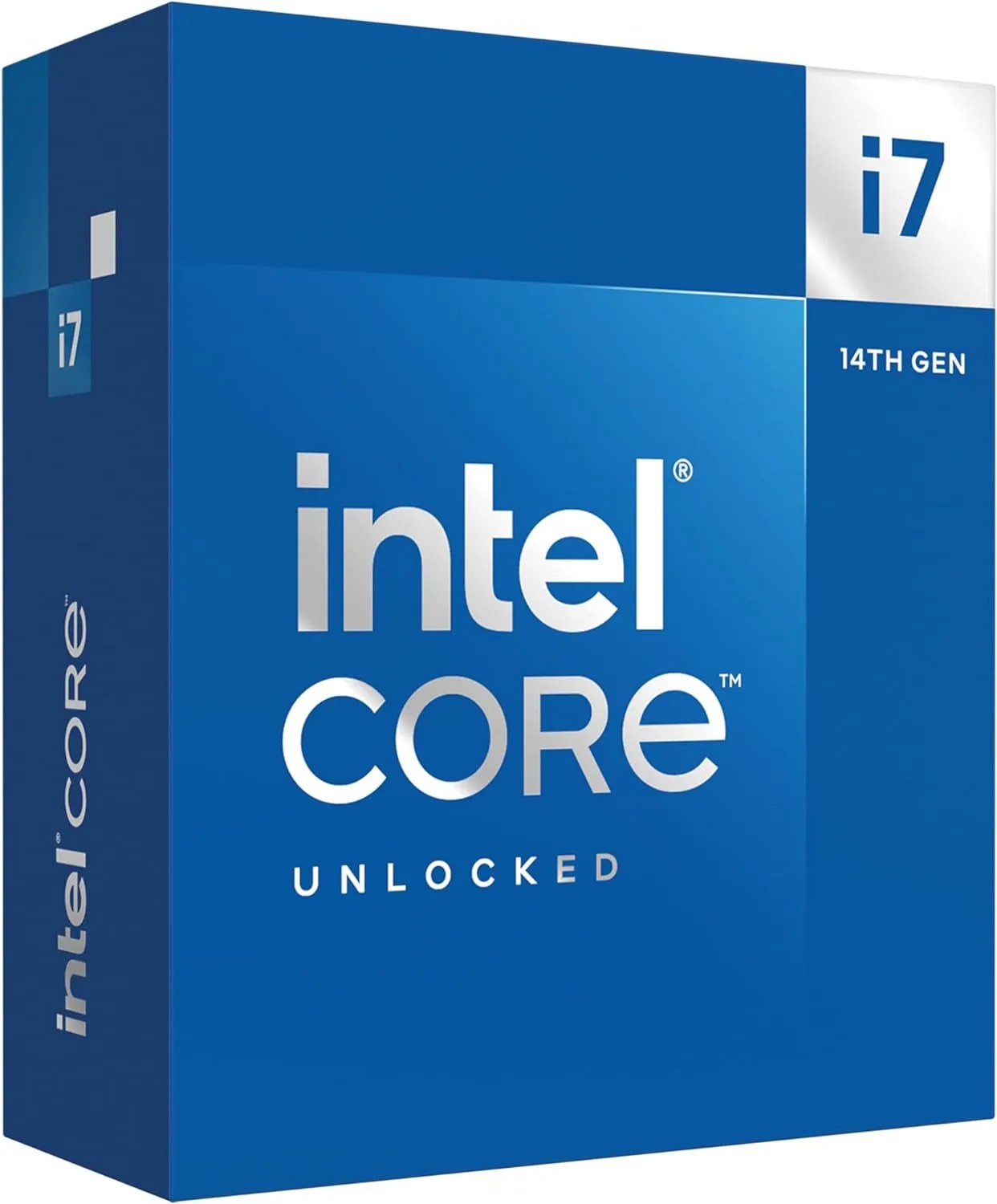
Intel Core i7 14700K 20-Core, 28-Thread CPU
The Intel Core i7 14700K 20-Core, 28-Thread CPU succeeds the Intel Core i7 13700K CPU with a 200 MHz boost clock increase as Intel also throws in an additional 4 efficiency cores to make it increasingly better value for money versus its predecessor.With 28 threads on offer and higher boost clocks, the Intel Core i7 14700K is noticeably faster in both games and productivity benchmarks alike while replacing its predecessor at the same price points.
The Intel Core i7-14700K checks a lot of boxes when it comes to performance, which makes it a great value choice in the high-end range of offerings. Listed right at $400 (at the time of writing), it is capable of delivering real world performance numbers that are not too far off from its more expensive older sibling, the14900K. With the Core i7-14700K, gamers get 20 cores (eight P cores and 12 E cores) and 28 threads with clock speeds of up to 5.6GHz out of the box. It is also a very capable overclocker, with enthusiasts being able to push the CPU way beyond its limits with some tweaking.
It comes with 33 MB Intel Smart Cache and a 253W maximum power draw. It supports all the latest connectivity and performance standards, including PCIe 5.0, DDR5 5600 MT/s, up to 192 GB of RAM, as well as advanced Intel technologies such as Turbo Boost Max Technology 3.0, DL Boost, Speed Shift, and more. Whether it is gaming or productivity, the Core i7-14700K offers great value.
Like with other Intel SKUs, gamers can save a bit of money by going with the iGPU-less option, theCore i7-14700KFor save even more money, albeit at the cost of performance, and go with theCore i7-13700K.
Intel Core i7-13700K
The Intel Core i7-13700K absolutely dominates the top-tier sector for value. In fact, with the right cooling and overclocking, this top-tier CPU can beat most of the non-X3D AMD competition. Plus, those who have a 600 series motherboard from their previous CPU, this will work with a bios update.The processor has 16 cores divided into 8 P-cores, 8 E-cores, and 24 processing threads. The processor comes with an integrated Intel UHD Graphics 770, maximum clock speed is 5.2 GHz.
As mentioned earlier, the 13th Gen CPUs are still very capable, and some models offer better value than even the newer generation of chips. The Core i7-13700K is a perfect example of that as it offers a similar level of gaming performance compared to the newerCore i7-14700K, but the jump in price does not justify the performance gap.
The Core i7-13700K features a 16-core 24-thread setup that includes eight P cores and eight E cores. It is capable of boosting up to 5.4GHz out of the box and has a maximum power draw of 253W, which some may consider a bit high. It also comes with 30 MB Intel Smart Cache, PCIe 5.0 support, DDR5 RAM up to 192 GB and up to 5600 MT/s, and an integrated GPU, same as the one found in the 14700K.
The 13700K supports Intel’s Turbo Boost Max Technology 3.0, Speed Shift, DL Boost, and more. It is also very capable when it comes to overclocking, which reduces the performance gap between the Core i7-14700K even more. Overall, the 13700K stands as the best last generation Intel CPU for gaming, though gamers can choose to go for the13700KFto save a little more money at the cost of the iGPU.
When Looking for an Intel CPU for Gaming, Consider the Following Factors
Motherboard compatibility:Motherboards are designed based on a specific socket and chipset, both of which relate to the generation of the CPU. Intel’s 12th, 13th, and 14th Gen CPUs use the LGA1700 socket and support 600 and 700 series chipset motherboards which include Z690, B660, Z790, Z760, and others. Those upgrading from a10th or 11th Gen Intel CPUwill need to purchasea new compatible motherboardas well.
Core count:Generally, the higher the core count, the better the gaming performance. There are two major factors that affect gaming performance: core count and clock speeds. For an ideal gaming experience, CPUs should have at least eight cores with hyperthreading. With the 12th Gen Core CPUs, Intel introduced the concept of P cores (Performance cores) and E cores (Efficiency cores) which makes them more power efficient.
Clock speeds:Like with core count, the higher the clock speeds, the better the performance. Intel CPUs generally offer somewhat higher clock speeds than their AMD counterparts and with each new generation of CPUs, the company tries to reach higher clock speeds and the latest 14th Gen Core i9 CPU is capable of hitting 6.2GHz out of the box. For comparison, the best AMD gaming CPU boost up to 5.6GHz.
Integrated Graphics (iGPU):Intel sells most of its CPUs with and without integrated graphics or iGPUs. The lineup of CPUs ends with ‘K’, ‘F’, or ‘KF’ where ‘K’ means unlocked with integrated graphics, ‘F’ means locked with no integrated graphics, and ‘KF’ means unlocked with no integrated graphics.
Overclocking:Not all Intel CPUs support overclocking. Only the CPUs that have ‘K’ or ‘KF’ in their name can be overclocked, but bear in mind that themotherboard should also support overclocking. The ‘Z’ series motherboards are more premium and great for overclocking, while ‘B’ series motherboards are more economical, but do not allow overclocking.
Price:As mentioned earlier, with the 13th Gen CPUs being a generation old, they offer great value and can be purchased at discounted prices. Intel has CPU offerings in all budgets, so gamers who are strapped for cash can find something that will work for them and so can premium CPU shoppers.
FAQ
Q: Is i7 better than i5 for gaming?
It depends on what kinds of games and what kind of gaming experience users are looking for. For a top of the line gaming experience, a Core i7 model would be better, but those willing to make a few compromises in terms of FPS and visual quality should stick with the Core i5.
Q: What Intel Core is recommended for gaming?
According to the company’s CPU lineup, the Intel Core i5 processors deliver a mid-level gaming experience, the Core i7 processors deliver a high-level gaming experience, while the Core i9 processors are capable of delivering a more consistent and top of the line gaming experience.
